2026-02-10 / 03월호 지면기사
/ 한상민 기자_han@autoelectronics.co.kr
.jpg)
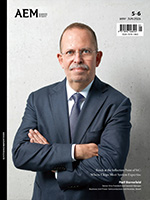
William S. Lerner, FRSA
CEO of WSL Consulting
This issue is not about styling - it is about escape. China’s ban on electrically retractable door handles reminds the world of a most basic safety principle: after a crash, a door must still open. In this interview, William S. Lerner examines the ripple effects of the regulation and the limits of connectivity- and cloud-centric solutions, then broadens the lens to ask why seemingly obvious safety ideas are so often ignored when they come from outside the OEM ecosystem - touching on the realities of patents and independent inventors. Ultimately, the question is whether the next generation of “future” vehicle design can first prove verifiable safety, including rescue and evacuation, before anything else.
by Sang Min Han _ han@autoelectronics.co.kr
한글로보기
A Reset: Why China Pulled the Plug
Han: Welcome back, William! China banned electrically retractable door handles last week. New vehicles cannot be sold with electric handles on the outside or inside starting on January 1, 2027. We interviewed you in November, before this happened. What global impact will this have? And why did China ban them?
William: Excellent question. I truly admire China’s decision, and the speed with which they did this. They had many vehicle events with these handles, and the occupants could not be rescued because the first responders could not get in, or the passengers could not get out, or both. The data, videos, witnesses, and first responders’ post-event summaries made this problem known, and they reacted quickly and correctly. The handles must return to being manual, inside and out. It was a reset, and proof that this new iteration of entering and exiting a vehicle presented grave dangers to everyone who travels in a vehicle or who has to perform a rescue. Bloomberg released a short documentary that clearly laid out the issues and pulled data from over eighty EV crashes and fires. Last week in the USA, the transcript from an emergency call clearly recorded a twenty-year-old trapped inside an EV with handles that had no power post-crash, and he begged for help. Unfortunately, he died from asphyxiation from the emissions while he was on the emergency call. Nothing could have saved him if help was not available in a minute or less. If his vehicle had manual handles, he would not have died. He was able to make the call and try to go to other doors in the vehicle to escape. They found his remains in the back seat. The vehicle manufacturer is now being sued by the family. The events are now becoming known to those outside of the automotive and first responder communities. And the ban has other positive effects that somehow are not being discussed on a governmental level. Owners of these vehicles have had many disturbing issues. One prominent model, when it is unlocked, with a passenger inside, can’t even be opened half the time. The handle retracts, and there is a swipe to open using your hand over the retracted handle. One owner said it works 50% of the time. So how does this work if a child is in a vehicle and has an issue, or an adult needs immediate medical attention? If the owner can’t always open the door, what would a bystander know? What would a first responder or police officer know? Who assumes you swipe to open a retractable door handle? And finally, what is the downside to banning these handles? The car may not look as “modern.” Perhaps. However, Rolls-Royce puts their loud and proud chrome manual handles on the Phantom, and no one seems to mind. The upside? Fewer injuries, deaths, confusion, and wasted time during a rescue if they don’t function as intended. And they don’t always extend post-crash as designed. Just look at all the governmental crash test site videos. It is shocking. They focus on survivability, not post-crash rescue or exits from the vehicles.
A Domestic Ban, A Global Loophole
Han: So what effect does this have globally? I never thought about all the consequences until you started to discuss this.
William: Well, let’s break it down. All new cars will not have them. That does not mean that all existing vehicles must be recalled and retrofitted. It does not affect the used car market. Millions of vehicles in China with these handles will continue to be driven. The issues are far from over, or dealt with holistically. China banned them, which is the second most populated country. India did not, nor did any other country. It does send a very strong message though. I hope every country will follow what China did. Now, from a practical standpoint, the ban does not apply to vehicles exported to other countries that do not prohibit the sale of them, to other markets that allow them. Canada is welcoming Chinese made vehicles, and entering into joint ventures with many of the manufacturers. Chinese manufacturers can export these vehicles to Canada, or produce and sell these vehicles in Canada. Canada can then export them globally.
Remember that these handles are not just on EVs. Many automotive companies are already shifting to having them on all, or most, models, like Mercedes. In the US or Germany, vehicles are on a roughly seven-year cycle for design and production. Chinas cycle is roughly three and a half years. So Mercedes just released the refreshed 2027 S-Class, which will be in dealerships in a few months. The handles are the same electrically retractable handles used in previous years for this flagship model. This leaves Mercedes with a clear choice to make. In China, clearly change the handles of the S-Class, E-Class, EQE, Maybach EQS, the CLA, and other soon to be released vehicles, or exit their home market, or continue to make the same number of vehicles and export them. In the US for example, no changes, yet. China can make these changes because the government is centralized. In the USA, it could take many years, if it were to happen at all. Having a patchwork of rules and optional solutions, like we have in the US, makes everything even more confusing.
How? No uniformity. Mercedes has what appears to be a random offering of electrically retractable door handles. I named some of them that have them, but the Maybach GLS, GLS, EQB, GLA, GLB, GLC, GLE, G-Class SUV, C-Class, all have manual handles. And this confusing situation exists before any regulations start from any country. What is a first responder to do? How can they study every model, when there are no side badges and front badging? And, mild hybrids with lithium-ion batteries don’t have any special identification.
Looking at another brand, and their unique approach is Ford. Ford announced in the USA, they will go back to manual handles for the Ford Mustang Mach-E. So, what will a first responder know before starting a rescue in poor visibility or at night? Will it have the electric handles or not? They are visually identical vehicles with no exterior badging announcing the handles. No other model that had electrically retractable door handles in the USA has gone back to manual ones. Who will know this? Confusion creates unsafe situations for everyone. And, to make it even more confusing and probably give your readers a headache, Volvo is introducing a third type of electric handle on the EX60. A fin by the side window, and the Tesla Cybertruck has no handle at all. No pop-out electric, or manual one. The vehicle detects the key card and the door pops out.
The Wrong Fix: When Connectivity Becomes a Distraction
What do governmental agencies and new emerging technology companies seem to be focusing on now?
William: I saw an event that a governmental vehicle agency held last week concerning new technologies and ways to assist first responders. I was very excited when I started reading about it. Then I actually laughed out loud. Why? It was about communications of events using software, cloud-based solutions, AI, and new ways to transmit vehicle information to a central station, which would allow first responders to understand what they were arriving at. Why did I laugh? eCall, OnStar, BMW Connected, etc., already do that. Yes, there will be important incremental improvements that can improve this, but look at what happened this year. Mercedes sunsetted mbrace. All the Mercedes that had it lost it. Why? Because 3G networks were sunsetted and were no longer supported. BMW did the same, along with other brands in the past four years or so, with models as new as 2021. So, we are at 4G, 5G, 6G, and eventually 8G. We can’t support 4G as time moves forward; systems will become too old and too costly to support. So, vehicle-to-call-center guarantees won’t be guaranteed.
The truly sad part about this was that the hosts and guests were all elated, and they were excited about a connected future for first responders! They concluded that we don’t know how it will wind up, but this is an exciting journey! They really just had to look at what happened in the past few years. Again, exciting - but the sole answer to a complex problem? No.
Now let’s break that down. If they came up with a crash notification that transmitted everything about a scene, including video, in a millisecond to a call center, and the call center sent it to the first responders in a millisecond, what changes? Yes, a faster response time at the vehicle because they have more information. Great, right? The vehicle did not burst into flames in the firehouse’s driveway. And if it did, we have seen them go from just sitting there to fully engulfed in flames in four seconds and eleven seconds. So that information? Useless for a four-second event.
Now, let’s take a less dramatic example. An EV with four passengers crashes into another car in a city and starts to burn. Four occupants are trapped inside because the electrically retractable door handles fail to open, and they can’t find the inside manual releases. The cabin fills with the battery’s toxic emissions. They have at most a few minutes before they are asphyxiated. The emissions displace oxygen (this keeps happening; it is not theoretical). So, the responders - with all the data in the world - can’t get to the scene in milliseconds. They have to get into their gear, get into the firetruck, travel to the scene, put on their breathing apparatus, get their equipment, set up the hoses, etc.
Let’s pause for a second and understand that electrically retractable handles that do not function as intended slow down a rescue, or make it more dangerous for drivers, passengers, and first responders. EVs burn so hot - at roughly 4,000 - 5,000°F - that first responders can’t even get in to rescue the occupants or get close enough to use tools to cut into the vehicle’s structure to remove the occupants. In the USA, that tool is called the “Jaws of Life.” It is useless in a fully engulfed EV fire because the first responder can’t work in those temperatures, when their breathing apparatus’s facepiece withstands about 375°F. All that data can be absolutely meaningless.
So, what is the answer? Multiple systems and protocols, and new and novel ways to look at these issues in a holistic and comprehensive way. Refine and enhance the data - give first responders and EMS every bit of relevant data they can handle.
Beyond the Vehicle: A Public-Health Radius
Now, let’s shift our perspective. If this EV is about to burn, those in the area will be exposed to the toxic emissions without any protection. They will not know to evacuate the area and go as far away as possible. The call center and cloud-based information, etc., are not for them. The toxic emissions can travel for miles, as we have seen at the Moss Landing battery fire. The soil was contaminated miles away, and we have the data.
So, why is it important that everyone in the area needs to go as far as possible, as soon as possible? They can become gravely ill, just like passengers, police, or first responders not wearing breathing apparatus or protective gear. Unfortunately, even their gear doesn’t fully protect them. We assume that if a vehicle is burning, it can’t have an impact on us unless we are in it or next to it. If it is fifty feet away, are we in the danger zone? Look at all the videos posted on TikTok and YouTube. They are probably even closer.
I am asked all the time: “What is a safe distance to be away from an EV that is burning?” Who knows? It depends on wind direction, speed, number of cells involved, battery chemistry or chemistries (most modern vehicles have three batteries), and if it is a plug-in hybrid, it will have gasoline on board, which can compound or prolong the event. My thoughts today - which are valid only for today, because we don’t really understand this - are at least the length of a football field, which is about 330 feet. I perhaps know too much, and am too cautious, so my comfort zone is actually four football fields, or about 1,320 feet.
Now, getting back to the EV event in a city, it is not just the issue of emissions spreading on the ground - it affects buildings because the emissions travel upwards too. They can go three hundred feet upward, which is roughly 20 - 25 stories high. Did that produce a dynamic you never thought about? Absolutely. Is the event near a metro or subway stop? Stores? A shopping mall? A restaurant? Negative or positive air pressure will determine where the toxins go. No two situations are the same.
Vehicles and trucks are everywhere. They are clustered in parking garages above and below ground, parked on the street in shopping areas, in dealership showrooms, and driving right past us if we are on the sidewalk. And if you don’t own an EV, you probably have taken an Uber or been in a friend’s car, which may be an EV. Everyone is affected whether they own a vehicle or not. This is a public issue, not just a driver or first responder issue.
Cloud-based systems for first responders must be improved, and vehicle communications must never be sunsetted. I would rather these communications companies figure out a way to get all the vehicles - roughly three million, and over one hundred models - back online. There are no software or hardware updates. Let’s work on restoring what we had before creating the improved versions. Am I being negative? No - realistic. Millions of drivers and their passengers don’t have the protection they paid for, or thought they had.
And I value vehicle-to-call-center communications, first responder - enhanced communications, connected infrastructure, and public alert advancements, which will improve rescues and transmit valuable information, etc. I hold four - soon to be five - patents in current and emerging spaces. We also need information about the status and type of vehicle on the vehicle, not just in the cloud going to a select few. Those around the vehicle need to instantly know the vehicle may be about to catch fire, off-gas, or produce other dangers. We need redundant systems, and must use every tool we have to provide as much specific information as possible, as quickly as possible. Information always leads to better results.
Think of it this way: If there is a fire in a school or hospital, it isn’t just the leadership team and first responders who are alerted. There are alarms, evacuations, sprinklers, and emergency plans in place.
Han: Can you explain your work and how it could help first responders and the public?
William: Absolutely. I hold patents for vehicle events to be sent wirelessly to any location or call center, and they can also be sent to a user’s phone, tablet, or smartwatch. Alerts can be sent to a parking garage’s management, alerting them that one of the vehicles is having an event, or is likely to have one. I have a thirty-year background in sensors, networks, displays, and safety.
My work certainly would have been a benefit at the Incheon apartment complex fire. If the EV had alerted the management office sooner, when it might have detected a fault, the event might not have involved six hundred vehicles and seven hundred families being displaced due to the event. Seconds count. Would it have stopped it? Absolutely not!
My patents for vehicle identification are designed to be exactly where they should be: located on the vehicle. I hold patents for putting a vehicle-specific QR or machine-readable code in a place on the vehicle that is likely to be intact after an accident. Bumpers get hit in the front and rear, so I would like to see my work in the B-pillar, on the shark fin, or other visible areas of the vehicle.
Redundancy is key, so there may be many hidden QR codes that become visible after an event, and some may be visible, including being hidden in the “sun dots” above the interior rearview mirror, in the grille area, and on the rear deck lid of the trunk. The QR code gives all the important information a first responder needs - examples include: make, model, battery size (if it is an EV), number of batteries, high-voltage disconnect location, low-voltage disconnect location, charger port location, battery type, battery size, and the type of door handle inside and outside of the vehicle. This is vital now that we know the issues and have data.
My work also includes a Morse code of illumination. If there is an event, the vehicle will self-identify: I am an EV, I have three occupants, I am being charged, my state of charge is 85% (it matters), my low-voltage disconnect is in the right rear corner below the trunk mat, my high-voltage disconnect is in the front left corner under the hood, the battery temperature is over 400°F, etc.
It becomes a dynamic condition where the vehicle “talks” to those around it, so they can make decisions about suppression and rescue approaches. The object is in failure mode, so the object identifies itself and its issues.
If you take the purely cloud approach, you may be at a scene during a vehicle event when it is dark and not understand what the vehicle is, how many occupants need help, if it is an EV or not, and what type of handles it has. Downloading an ERG (Emergency Response Guide) once the vehicle is identified takes time. My work puts it right on the vehicle. A quick scan, and you have it.
So instead of standing with a tablet or getting the information from a call center, having the vehicle “talk” to you directly is the most efficient - and it can do so in total darkness. The vehicle can “talk” to everyone in the vicinity because the LEDs used can be seen for three statute miles, like drone lights. The public knows when an ambulance is in the area, or police cars are responding to an event. The light colors and patterns are unique and known, just like the sound signatures they produce. My work can also include acoustical alerts. I use every tool available to make the dangers known.
And remember: there is no diagnosis, treatment, or cure for toxic battery emissions exposure. We don’t have the data or history to fully understand the long-term effects. We do see first responders’ grave health issues post events. Will they get better or worse as the years go by? Who knows. The small number of trackable cases point to deteriorating health status.
From Risk to Adoption: Why Safety Ideas Stall
Han: So the story doesn’t end with simply identifying what the risk is. Why is it that safety ideas that seem so clear - especially when they come from outside the traditional OEM ecosystem - so often fail to get adopted? How have regulators and automakers responded?
William: I wish I could say it was great, but it is not. Let’s take my work out of the equation and look at any game-changing innovation in the automotive space. This kind of innovation comes from an independent inventor. What does the world think of independent inventors? They are nutty and think they deserve billions and fame. Do people want to hear what the inventor did, how he thinks it is vital, and how it should be implemented? No. They have their team create the products.
Some companies, like Toyota, refuse to look at outside submissions. Some are actually aggressive against inventors outside of their network. Why? Mazda got sued by NPEs (non-practicing entities), which they call “patent trolls,” one too many times, and told companies they deal with that if they sell their patents to an NPE, they won’t do business with them.
Let’s break that down. Mazda got sued - maybe rightfully so - for infringement, and threatens other companies? They tell other companies what they can and cannot do with the patents they hold? What if those companies wanted to raise capital and sell some? Look at all the losses GM, Ford, and Stellantis wrote off this year. The sum is over fifty-two billion dollars. Why wouldn’t they want to sell some unused or valuable assets? Why should they be blacklisted and threatened?
What if an outsider has a valuable and useful patent? What if he or she dies and the heir sells it to an NPE? Is it not valuable? Should it not be considered for use, even if it can save lives? Patents don’t have feelings, pedigrees, or emotions. It is no more or less valuable if it is owned by a king or inherited. A patent is ownership of a technology that is unique, for example. It is very difficult to get an important patent, and that patent is like real estate. The owner can license it, sell it, or do whatever they want with it. No one gets to dictate its future except the current owner. And if it is infringed upon, it doesn’t matter who owns it - because it is being illegally used without payment.
The world of intellectual property is a minefield, especially for an independent inventor, which is what I am. People often shut down when I say the “P” word. Why? Many think they can’t listen because of a potential lawsuit. That is absurd. Who can’t look at a globally published, granted patent? Anyone can see my twenty patents if they have an internet connection, by going to Google Patents.
If you are not open to improvement or new ideas, it hurts a company, its customers, and society. What if the seatbelt or airbag was invented by an outsider, or held by an NPE? Is it better not to have the two most important vehicle safety inventions in the history of automotive advancements?
Using this past week as an example, the organizer of the governmental cloud event - who is the US safety director of a global automotive company - previously sent me a thumbs-up emoji to my first patent interview. Did she read it? Absolutely not. I then sent her an update about my work in a message on LinkedIn. She replied: “Your message is too long.” I then sent her a message that had four sentences. She removed me as a connection.
Let’s break that down, because it is often typical. She clearly had no interest in new advancements from someone outside of her circle. She had no time to explore or be curious about what others are doing, and how it could be helpful. And I used the “P” word, and that was all too much. We live in a society that can’t even watch a YouTube video - hence YouTube Shorts and the popularity of TikTok videos that are 15 to 60 seconds long. So I am a problem to them because of the “P” word, I’m an outsider, and I have to make them read, think, contemplate, and be open to new and better paths forward that they or their company didn’t think of. So, Darwin. Could he explain his work in a paragraph? I feel as if the automakers are just telling the world how great they are, and it is sad that they are missing opportunities to do better and be better.
What Needs to Change
Han: So, what do you think needs to change concerning the automotive industry? How can they make better products, safer products, and protect their customers and first responders?
William: Excellent question, and of course I have a lot to say!
Be willing to work with first responders. Why? Don’t expect them to perform impossible rescues, difficult rescues, and not engage them when you start to design a vehicle. They determine the life safety of your customers. When you design a new vehicle, engage them. Ask them what would be the easiest way to perform a rescue. Ask them for uniformity of high-voltage and low-voltage disconnects. Take their advice. You make the products they have to work on, so engage them. It is a win/win for all. We certainly would not be dealing with these retractable electric handle issues. It would have never happened.
Be open to outsiders. Listen, engage, and understand. Not every game-changing innovation comes from your own company or team. Sometimes outsiders have a unique perspective, clarity, understanding, or have worked for decades in the safety and inventing space - and have value. Stop thinking everyone is going to sue you, demand billions, and stop putting up walls concerning inventors. Yes, NPEs can be lawsuit-happy, and sometimes are very justified in their rights. And yes, inexperienced inventors can be absurdly demanding concerning their patent’s value and royalties they should be paid, and may not be reality-based - but be mindful.
There are inventors who have worked for decades on solving issues you are currently having, or ways to make your products safer, who understand their place and value in the world - ones that want to collaborate and not take the credit in a public way; ones that are truly happiest innovating and letting companies be stronger, safer, and do better.
And finally, it takes years from the time you have an idea until you are granted a very important and broad patent. You have to become an expert in the field you are inventing in. During the process, the patent office tells you constantly why you should not get it. It is often a battle of wits and thousands of pages of prior art they must sift through. Use the inventor’s knowledge, because the inventor may actually know more about the space than you - or anyone on your team - does.
William S. Lerner
As the CEO of WSL Consulting and an independent inventor with more than 20 patents, he assesses emerging risks in the EV, lithium-ion, and e-mobility era - from accidents and system failures to threats and acts of vandalism or terrorism - and develops safety technologies and response strategies that protect first responders, law enforcement, and critical infrastructure. He has worked with the FBI, DHS, fire investigation units, ARFF teams, and major transportation-infrastructure authorities, conducting risk assessments for some of the world’s largest tunnels, ports, bridges, and parking facilities with over 120,000 spaces. His work has helped warn industry stakeholders about newly emerging dangers such as toxic battery residues and secondary contamination.
As the co-founder of Intermodal Renewables, he licenses his solar- and renewable-energy - based intermodal transportation technologies and patents to help optimize future land, sea, air, and rail systems as the world transitions toward cleaner energy.
AEM(오토모티브일렉트로닉스매거진)
<저작권자 © AEM. 무단전재 및 재배포 금지>



.jpg)