2025-12-10 / 01월호 지면기사
/ 한상민 기자_han@autoelectronics.co.kr
.jpg)
INTERVIEW
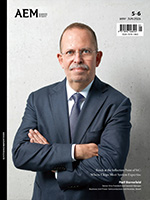
Sami Hyyrylainen
Senior Vice President of TactoTek
The automotive interior is at a pivotal moment where lighting and electronics converge. The once-layered stack of PCBs, light guides, and mechanical switches is rapidly disappearing, giving way to an era in which electronics, optics, mechanics, and design merge into a single seamless surface. At the center of this shift is TactoTek’s In-Mold Structural Electronics (IMSE®), a technology that redefines “electronics as structure” and “function as surface,” offering OEMs a new level of design freedom and a fundamentally different manufacturing paradigm. The same transformation is now unfolding on the exterior as well. This interview explores how IMSE is influencing automotive UX, E/E architecture, and the design language of future mobility.
by Sang Min Han _ han@autoelectronics.co.kr
Could you briefly introduce your company? TactoTek® integrates electronic circuits, mechanical structure, and design into a single surface, creating a new category known as smart surfaces. How do you think IMSE® technology is fundamentally transforming conventional automotive electronics systems and interior design?
Hyyrylainen TactoTek® is the global leader and originator of In-Mold Structural Electronics (IMSE®), an innovative technology that integrates electronic circuits, components, mechanical structure and surface design into a single, seamless smart surface. From our headquarters in Oulu, Finland, and local offices in Japan, Germany, and the United States, we serve our customers worldwide through a licensing model. We hold a portfolio of more than 310 granted patents globally and extensive know-how that protect the complete IMSE value chain from design to mass production. Our leadership in innovation was also recognized with two prestigious awards at CES in 2025.
Technically, IMSE changes automotive electronics and interior design at a fundamental level. Printed circuitry and electronic components are integrated directly into thin, formed plastic structures, which means that traditional assemblies built from PCBs, light guides, mechanical switch hardware, brackets and separate trim parts can be replaced by a single smart surface. For designers, this unlocks new levels of freedom: functions such as touch, illumination and sensing can follow the geometry of the interior instead of forcing the interior to follow electronics packaging. For engineers, IMSE brings clear system-level benefits through reduced part count, less wiring, lower weight, smaller package depth and improved reliability thanks to full encapsulation of electronics in the molded structure.TactoTek participates in international standardization work related to in-mold electronics and structural electronics, bringing real manufacturing and field-test data into standardization working groups. This helps ensure that emerging global standards reflect practical, proven approaches and gives OEMs confidence that IMSE is aligned with the broader industrial roadmap.
.jpg)
.jpg) IMSE Illuminated Emblem
IMSE Illuminated Emblem
The Reinvention of Lighting, Sensing, and Interfaces:
IMSE Solutions and HMI Innovation
TactoTek offers several IMSE technology solutions - such as Emblems, Lightlines, and SurfaceLight. Could you explain how each solution differs in terms of design direction and the parts of the vehicle it best fits? From an OEM perspective, what are the key criteria for selecting among them?
Hyyrylainen TactoTek’s IMSE technology portfolio is built around different complementary technology solutions that share the same core process but are optimized for different types of lighting and functional integration: Halo and Pattern illumination solution for the Emblems, Lightlines, and SurfaceLight. Together they give OEMs a coherent toolbox for implementing smart surfaces in both interior and exterior applications.
IMSE Illuminated Emblem solutions are thin, conformal, single-piece surfaces that deliver bright, uniform illumination with no bezels, fasteners, or visible joints - pure styling for both interior and exterior use. Outside-in mounting allows cost-efficient placement on hoods, grilles, liftgates, quarter panels, and interiors with only a small connector pass-through, eliminating large cutouts and complex brackets. This flexibility enables illuminated brand signatures almost anywhere.
IMSE Lightline solutions are optimized for high-performance, precisely controlled light lines and icon illumination. Light-guiding structures are integrated into the molded part so that light can be tightly directed with high-efficiency and minimal leak between adjacent features. This enables bright, small package size, sharply defined symbols and lines in very compact layouts, which is ideal for switch clusters, function panels and decorative interior light signatures.
IMSE SurfaceLight solutions are designed for large, homogeneous illumination over broader areas. It uses an ultra-thin IMSE light engine in which the light sources are integrated into the light guide, enabling edge-to-edge uniformity and rich animation effects in a surface typically around only a few millimeters thick. SurfaceLight is well suited for ambient light panels in doors or instrument panels, headliners with integrated ambient or functional light, and wider signature elements, and it can also be combined with textiles, wood and other trim materials without adding depth or complexity.
From an OEM point of view, platform selection is driven mainly by required lighting area and uniformity, available depth, curvature, functional density and preferred assembly concept. Because all solutions are based on the same underlying IMSE process, OEMs can mix and match them across programs while leveraging a common, proven technology base.
With IMSE, physical buttons disappear, and light and touch merge into one seamless interface. While minimalistic design is appealing, how do you ensure such invisible UIs remain safe and intuitive for drivers? What new sensory or emotional experiences do they enable inside the vehicle?
Hyyrylainen IMSE enables a new generation of seamless, intelligent surfaces, and safety and intuitive use are the starting point for every HMI concept. The technology gives license partners a wide set of validated methods for guiding and informing the driver so that minimalist interfaces remain highly functional and predictable.
From a safety standpoint, IMSE supports multiple layers of indication and feedback. Integrated lighting can clearly communicate the vehicle state, for example whether the car is parked, driving, charging or in a restricted mode. Light-based cues can also support situational awareness, such as indicating when a door is locked or unlocked, highlighting warning states, or helping to visualize assistance-system information. Color changes and dynamic patterns make these signals easy to interpret even on seamless surfaces.
Touch interactions are designed to be equally controlled and intuitive. Because capacitive sensors are integrated directly into the 3D structure, designers can create well-defined gesture zones, such as swipes for opening a window or tapping to adjust a function. These interactions can be reinforced with localized illumination, subtle haptic feedback and sound cues, creating a clear cause-and-effect experience that does not require the driver to take eyes off the road.
Beyond safety, IMSE opens up rich sensory and emotional experiences inside the vehicle. Surfaces can respond with light animations that reflect driving modes, support navigation cues or welcome the driver when entering the car. Ambient surfaces can shift color or intensity depending on context, creating a stronger emotional connection between occupants and the vehicle environment. In this way IMSE allows interiors to be both highly intuitive and highly expressive: invisible when inactive, clearly communicative when needed and capable of turning the cabin into an interactive space.
Manufacturing, Reliability, and Architecture:
The System-Level Evolution Enabled by IMSE
IMSE can be manufactured using existing processes - printing, SMT, forming, and molding. How well does this technology harmonize with the current manufacturing ecosystem, and what kinds of changes have you observed in productivity or quality in real production environments?
Hyyrylainen IMSE technology is built on standard industrial processes, which is one of the reasons it harmonizes so well with existing manufacturing ecosystems. Screen printing, SMT assembly, forming and injection molding are all well-established processes in automotive supply chains, and IMSE combines them in a controlled way rather than requiring completely new equipment.
There is now a broad and mature ecosystem of partners covering each step of the process, from printing and forming to molding and final assembly, across Asia, Europe and North America. This enables Tier-1 suppliers to adopt IMSE with minimal disruption to their infrastructure. In practice, they can configure their lines from fully automated to hybrid manual/automated modes depending on volume and cost structure, while still following the same basic process logic they are familiar with.
In terms of productivity and quality, the main impact comes from consolidation. A conventional electronics-plus-trim assembly may require several parts, multiple suppliers and multiple assembly stages. An IMSE solution turns that into one molded part that already contains the circuitry, lighting and structural features. This reduces handling steps, simplifies logistics and shortens final assembly, which in turn improves takt time and lowers the risk of assembly errors.
TactoTek provides design rules, process guidelines and quality-assurance concepts to its licensees, including recommendations for in-line inspection and end-of-line testing. Experience from real production environments shows that IMSE can achieve stable yields and repeatable performance that are fully compatible with automotive quality expectations. In many cases, the integrated nature of IMSE also reduces the number of potential failure points in the final module compared with traditional multi-part solutions.
Automotive parts must withstand harsh conditions for years. How does TactoTek validate the heat resistance, humidity endurance, vibration tolerance, and overall durability of IMSE structures? Could you share examples of components that have successfully passed these automotive-grade tests?
Hyyrylainen IMSE structures are validated against demanding automotive qualification requirements, and every test in the program is selected to stress the physical and functional characteristics that are most relevant for the technology. The objective is to demonstrate that IMSE performs at least at the same level as conventional electronics modules under real vehicle conditions.
The core environmental verification includes long-term exposure tests, such as the well-known 85/85 test at 85 °C and 85 percent relative humidity, which is used to confirm moisture resistance and material stability. Thermal-cycling tests between -40 °C and
+105 °C are used to verify that the printed conductors, component interconnections and polymer structure retain their integrity under repeated expansion and contraction. Dedicated aging and storage tests demonstrate that inks and substrates maintain their properties over time.
Throughout these tests, electrical parameters, optical output and mechanical adhesion are monitored to ensure that there is no drift or degradation. IMSE technology is also validated for EMC/EMI performance in line with automotive standards so that they can be integrated into vehicle networks without issues. Because IMSE electronics are fully encapsulated within the molded structure, some traditional tests designed for exposed components are not relevant; instead, the focus is on those load cases that matter for a sealed, structural electronic assembly.
The validation program is implemented using qualified, automotive-grade components, including smart RGB LEDs, single-color LEDs and passive components that have been through the full IMSE reliability test plan. IMSE technology has been validated together with major automotive OEMs in joint qualification projects. Multiple IMSE technology validation samples, such as interior control panels and illuminated door modules, have successfully completed OEM-specific environmental and functional testing, confirming that IMSE is ready for mass production and long-term use in vehicles.
In the era of electrification, weight and energy efficiency are crucial. How does IMSE contribute to vehicle lightweighting and energy savings, and are there measurable results that OEMs can already recognize or quantify?
Hyyrylainen IMSE contributes directly to vehicle lightweighting and energy efficiency by integrating functions that are traditionally built from several separate parts into a single thin structure. When PCBs, light guides, switch hardware, brackets and decorative trim are replaced by one IMSE module, both part count and mass decrease. Depending on the application, IMSE modules are typically around 30 to 60 percent lighter than the conventional assemblies they replace, while still meeting all mechanical and functional requirements.
Lighting efficiency is a significant benefit. LEDs and light-guiding structures are fully embedded in the molded part, which means that nearly all emitted light is utilized. There are no air gaps or external housings that absorb or scatter light, and light is directed precisely where it is needed. In measured comparisons, IMSE lighting solutions have achieved up to five to ten times better lumen-per-watt performance than equivalent conventional constructions.
For OEMs this creates tangible design choices. They can reduce the number of LEDs for a given brightness level, which lowers power consumption and thermal load, or they can maintain power usage while significantly increasing the perceived light output and design impact. Both options contribute to lower electrical load on the vehicle and help support EV range and efficiency targets.
.jpg)
.jpg) Door Trim Application and IMSE SurfaceLight
Door Trim Application and IMSE SurfaceLight
A New Paradigm for Automotive Electronics and Design
OEMs already quantify these gains in mass, power, and assembly efficiency - proving IMSE’s tangible contribution to vehicle performance and environmental goals. Cars today are essentially powerful computers on wheels. How can IMSE connect with and extend new electronic domains- such as vehicle E/E architectures, sensors, or V2X communication systems?
Hyyrylainen IMSE fits naturally into the evolution toward modular, zonal and software-defined E/E architectures. As vehicles move to distributed intelligence, smart surfaces based on IMSE provide an efficient way to bring sensing, control and illumination directly into structural elements rather than adding separate electronic boxes.
A good example is an IMSE solution for a door trim. Within one thin 3D surface, it can combine capacitive touch sensing, temperature sensing, light lines, SurfaceLight elements, ambient illumination and an embedded microcontroller. This smart module communicates with the master controller over the vehicle network and can replace several traditional sub-modules with one integrated structure. The result is shorter wiring, simpler routing and a cleaner overall architecture.
Because IMSE relies on over-molded printed conductors and accurate placement of components, electronic functions can be extended to almost any surface in the cabin. This opens opportunities for distributed sensing, gesture interfaces, integrated antennas for connectivity, and intelligent lighting that responds to driver inputs or vehicle status. IMSE-based panels can be treated as addressable nodes in the vehicle network, just like conventional ECUs, but in a much more compact form factor.
In essence, IMSE supports the industry’s move toward a networked electronic ecosystem in which intelligence is embedded into the form factor itself. For OEMs this means greater flexibility in where functions are placed, reduced architecture complexity and a scalable platform for integrating new sensing and communication technologies, including those needed for V2X-enabled vehicles.
Recently, IMSE is also attracting attention in exterior applications - illuminated emblems, smart pillars, and charge ports, for instance. What are the main technical keys or design needs behind achieving both durability and brand expression in these exterior environments?
Hyyrylainen Exterior environments place much higher demands on electronics than interior applications, and this is where the structural nature of IMSE brings particular value. To perform reliably on the outside of the vehicle, the technology must combine optical performance with very high durability against weather, UV exposure and mechanical impact.
In IMSE exterior parts, electronics are fully encapsulated in UV-stabilized, weather-resistant polymers. This sealed construction protects LEDs and circuitry from moisture, temperature swings, car-wash chemicals, road debris and stone impact, allowing the part to operate reliably over the vehicle lifetime without bulky additional housings. The mechanical integration of fixing features into the molded part also simplifies assembly and ensures stable alignment.
At the same time, exterior brand elements such as illuminated emblems, smart pillars or charge-port indicators require precise, uniform and vivid illumination. IMSE addresses this with advanced optical design in which light-guiding structures and diffusive layers are integrated into the component. This allows designers to create crisp light signatures and logos with consistent brightness and color across different models and lighting conditions.
IMSE also supports dynamic brand expression through integrated RGB LEDs and control electronics. OEMs can implement welcome animations, charging status indicators or signature sequences that reinforce brand identity and enhance user experience. Because the light engine is embedded in the structure, the part remains thin, elegant and robust while delivering sophisticated visual effects.
Taken together, these attributes enable exterior components that satisfy stringent automotive durability requirements and, at the same time, give design teams powerful tools to express the brand through light in ways that are difficult to achieve with conventional technologies.
From an OEM or Tier-1 supplier’s perspective, what kinds of efficiency improvements or supply-chain advantages can IMSE bring in practice?
Hyyrylainen IMSE streamlines the supply chain and manufacturing flow by integrating mechanical, electronic and decorative functions into one structure. Where a traditional solution may require separate PCBs, wiring harnesses, light guides, switch mechanisms and trim parts sourced from multiple suppliers, an IMSE module consolidates these into a single component.
For Tier-1 suppliers, this consolidation reduces the number of parts to procure, stock and assemble. It shortens assembly lines, decreases the number of process steps and inspection points and simplifies logistics. Fewer interfaces between components mean fewer potential sources of variation and fewer opportunities for quality issues, which supports stable series production and improved overall equipment effectiveness.
For OEMs, these benefits are reflected in more competitive pricing from their Tier-1 partners and improved overall system performance. IMSE enables greater design freedom, allowing seamless integration of lighting, HMI, and functional electronics into thin, lightweight 3D surface, which opens entirely new opportunities for innovation not achievable with conventional electronics and mechanical assemblies. At the same time, the simplified structure contributes to reliability, weight reduction and improved sustainability, aligning with automotive industry goals for efficiency, lifecycle costs, and reduced environmental impact.
.jpg) IMSE Controller
IMSE Controller
How to Start an IMSE Project:
Design Thinking and Development Processes
When designers and engineers begin on IMSE projects, what kind of process or mindset works best? How do TactoTek’s resources - TactoTek Online - support the design and manufacturing work?
Hyyrylainen A successful IMSE project starts with a shift in mindset: designers and engineers need to think about electronics, mechanics, and aesthetics as one integrated system rather than separate domains. IMSE structures combine circuits, materials, lighting, and form in a single manufacturing process, so teams benefit most when they approach the early phases collaboratively. The best outcomes come from treating industrial design, electronics design, and manufacturing constraints as interdependent from the start, aligning intent, feasibility, and cost early rather than attempting to treat IMSE as a last-minute replacement for a conventional part at RFQ or award stage. When a concept has been created for traditional technologies, key architectural decisions are already locked, making it difficult to realize the full value IMSE can offer. A practical way to work is to begin with function and experience, then map those into IMSE-specific building blocks: where illumination is needed, how touch interaction should feel, what geometric constraints exist, and what material stack-ups allow. From there, iterative feasibility checks with TactoTek’s design guidelines, considerations, and rules help teams understand what is possible, what is risky, and what can be optimized. That early integration avoids expensive redesigns and keeps the project on a predictable path.TactoTek Online supports this way of working by giving teams direct access to structured, engineering-grade knowledge. The platform organizes information by purpose - design rules, material behavior, manufacturing requirements, reliability guidance, and examples of proven patterns - so designers and engineers can quickly find what they need at the moment they need it. The content is deliberately modular and linked: a high-level concept leads to detailed rules, which lead to process specifics, which lead to validation considerations. This mirrors how people work through IMSE problems, and it helps both new and experienced users make informed decisions without searching across disconnected documents.In short, the most effective IMSE teams adopt a systems mindset, collaborate early, and use authoritative guidance to navigate the unique trade-offs of structural electronics. TactoTek Online is built to reinforce that approach: clear structure, practical rules, and context-rich knowledge that supports real design and manufacturing work.
The Global Ecosystem and the Korean Market:
An Expanding Collaboration Model for IMSE
TactoTek has partnered with many global leaders - from Tier-1s like Valeo to semiconductor (material companies etc.) companies. right? How have these collaborations helped advance your technology, and what do you see as the defining differentiator of IMSE compared with alternative approaches?
Hyyrylainen We here at TactoTek have always believed that transformative technologies require a strong ecosystem around them. For this reason, we invest heavily in building and nurturing an ecosystem that spans the entire value chain, from OEMs and Tier-1 suppliers to engineering service providers, machinery manufacturers, and the world’s leading material and component suppliers. This collaborative model is one of the major forces accelerating the maturity, scalability and global adoption of IMSE technology.Partnerships with Tier-1 companies such as Valeo and others have allowed us to validate IMSE in real automotive development programs and integrate the technology into established quality and manufacturing systems. At the same time, close cooperation with semiconductor, material and component suppliers has been equally important. In many cases we have worked with these partners to develop components that are compatible with both traditional electronics and IMSE, opening a wider market for the component supplier while enabling IMSE licensees to benefit from simpler circuit designs and more efficient manufacturing.
These collaborations ensure that IMSE evolves in step with advances in LEDs, sensors, conductive materials, polymers and adhesives. By engaging early in component and material development, we help define performance targets that work for both printed electronics and the over-molded 3D structure. This improves reliability and gives our license customers access to a set of thoroughly validated building blocks.
The defining differentiator of IMSE compared with alternative approaches is the true structural integration of electronics, mechanics and design into a single mass-manufacturable 3D part. Many in-mold electronics concepts focus mainly on printed conductors or simple switch functions. IMSE uniquely combines printed circuits with standard SMT components and established forming and molding processes that are already used in automotive high-volume production. The outcome is a thin, durable smart surface that can fully replace multi-part assemblies rather than only complement them.
Do you already have customers or partners in Korea? How do you envision potential collaboration or joint development with Korean OEMs and Tier-1 suppliers in the near future?
Hyyrylainen TactoTek has a strong connection to the Korean automotive industry through its local licensee LS Automotive Technologies, which is actively exploring suitable IMSE applications with leading OEMs and suppliers. This local presence is important because it combines TactoTek’s technology and know-how with Korea’s deep competence in automotive electronics and manufacturing.
Korean OEMs have long been pioneers in using illumination as a distinctive design and user-experience element in both interiors and exteriors. This aligns very well with the strengths of IMSE, which brings together aesthetic and functional advantages by integrating lighting, touch and sensing into thin, smart surfaces.
TactoTek’s business model is based on licensing its technology and collaborating with OEMs and Tier-1 suppliers to co-create innovative smart-surface solutions. This collaborative approach has proven successful in other global markets, and we see significant potential for similar partnerships in Korea. By combining IMSE’s freedom of design, integrated lighting and sensing, and sustainability benefits with Korea’s advanced manufacturing ecosystem, we aim to help local partners accelerate their next generation of mobility designs.
Sami Hyyrylainen
He leads global licensing and business development at TactoTek. He has held executive and managerial roles at several high-tech companies, including Nokia, Hantro, Senseg, and On2 Technologies Inc., contributing to business growth, strategic partnerships, and international market expansion. Through leadership assignments in Finland, Japan, and Taiwan, he has developed strong cross-cultural competence and a proven ability to operate successfully in diverse global markets. He is fluent in Finnish, English, and Japanese, and holds an M.Sc. in Electrical Engineering from the University of Oulu in Finland.
AEM(오토모티브일렉트로닉스매거진)
<저작권자 © AEM. 무단전재 및 재배포 금지>



.jpg) [ICS] 10BASE-T1S 무료 교육 (매월 둘째 주 금요일)
[ICS] 10BASE-T1S 무료 교육 (매월 둘째 주 금요일)