India’s ADAS Frontier: How HL Klemove Is Reimagining Safety and Software-Defined Mobility
.jpg)
INTERVIEW
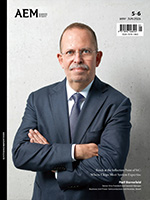
Kian S. YOU
VP of HL Klemove India Tech Center
Kian S. You flew into India in 2018 for what was supposed to be a short assignment - overseeing an ADAS project for a major Indian OEM. But the project triggered unexpected interest across the industry, pushing Kian and HL Klemove to dig deeper into the ADAS landscape here and to only realise that India was an entirely different market. They understood that India it was a technical stress-test that exposed the limitations of global ADAS software almost immediately.
This realisation prompted HL Klemove to establish an India-focused R&D hub in Bengaluru, complemented by a manufacturing base in Chennai to rewrite ADAS behaviour for Indian roads and develop customised solutions that global playbooks simply could not deliver.
AEM’s Sarada Vishnubhatla meets Kian S. You, Vice President, India Tech Center, HL Klemove India, to trace a journey defined by steep learning curves, aggressive localisation, and milestones shaped by the realities of one of the world’s most demanding mobility environments.
by Sarada Vishnubhatla_sarada@autoelectronics.co.kr
“India is a complex market. And winning an award for our first ADAS project in 2018 was a turning point for us,” Kian says with a smile. That moment came just as Indian OEMs were beginning to recognise the potential of ADAS, placing renewed emphasis on vehicle safety even as the regulatory landscape gradually accelerated in that direction.
He reflects on the shift that followed, “Based on that project, most OEMs in India have steadily become willing to adopt ADAS features. And also because of BNCAP, which the Indian government initiated two years ago and which will take effect in 2027. Then in 2028, an ADAS feature called AEB - Autonomous Emergency Braking - will be made mandatory.”
Over these years, HL Klemove’s India Tech Center has grown into a central partner for Indian OEMs, working in tandem with the company’s manufacturing base in Chennai. For Kian, this period has meant a dramatic expansion of responsibility and scope. “When I came here, I was managing the ADAS project and I was also in charge of the AI software,” he says. “Now I am completely focused on our R&D center. This center works not only on ADAS project management or system management, but also on basic software development and vehicle testing or vehicle tuning activity in India as per Indian-specific scenarios. And our target is localized R&D and localized manufacturing.”
Localising from the ground up
HL Klemove’s India Tech Center operates on a clear philosophy - ‘Global Standards, Local Speed.’ This means the team in India stays aligned with the company’s global technology roadmap while retaining the agility to execute quickly and tailor innovations for Indian conditions.
Kian explains, “This approach ensures that our Indian team is fully aligned with the global technology roadmap while maintaining the agility to execute rapidly and customize innovations for the local market.”
The company’s defining strength lies in its end-to-end capability. Rather than offering isolated sensors or standalone software components, HL Klemove delivers a fully integrated system - covering sensing, perception, and decision-making. This integrated approach results in faster development cycles, smoother validation, and higher reliability. “We are testing all of our software from the software level to vehicle test level,” he adds.
For this integration to succeed in India, HL Klemove needed something no imported system could provide and it was years of real-world Indian driving data.
He shares, “India has different environment, road conditions, and pedestrian behaviour. That is one reason why since 2018 we have been collecting data of Indian roads. We have a vehicle traversing the length and the breadth of the country to collect data. Currently also this is ongoing. Based on that data, we analyze and create India-specific software.”
This long-term data collection has become one of HL Klemove’s strongest differentiators.
He adds, “Our USP, compared to other OEMs and Tier 1 suppliers, is that they may have started collecting data but we already have it based on which we have India-specific software,” he explains. “During the six years, we have built strong relationships with our local OEMs. Our proximity to our clients enables us to provide solutions to their unique challenges promptly.”
That proximity - both physical and cultural - has shaped HL Klemove’s India strategy profoundly. “Indian OEMs have high enthusiasm compared to Europe or Korea,” Kian laughs. “Most OEMs in India work really hard and keep us on our toes.” For him, that relentless pace is welcome because it pushes the team to innovate faster and better for this market.
The India Tech Center not only manages HL Klemove’s ADAS projects and systems, but also handles base software development,
as well as India-specific vehicle testing and tuning based on local driving scenarios.
India’s strategic role
For HL Klemove, India is more of a strategic base for long-term global growth rather than just a regional market. When asked why the company chose to establish a full-fledged R&D center here, Kian points to a blend of market potential and talent depth, “Market forecast shows China to be leading the global market currently followed by the US and then India. And this country is attractive to us and we understand that Indians have good IT knowledge. Also, when it comes to labour cost, it’s cheaper. This has helped us focus on three strategic pillars - R&D expansion, partnership development and production capability.”
These pillars form the backbone of HL Klemove’s India strategy. R&D expansion involves broadening technical centers with a sharper focus on software validation, sensor integration, and ADAS algorithm testing. Partnership development is being strengthened through collaborations with leading Indian universities and research institutes to nurture young engineers and build a sustainable talent pipeline. And production capability is being reinforced to deliver manufacturing robustness that can support both domestic and export markets.
Through these initiatives, HL Klemove aims to help India evolve into a self-reliant base for engineering, development, and eventually, high-value manufacturing. Yet the company recognises that India is a unique market with challenges built into it. The very factors that make it attractive - its diversity, complexity, and sharp cost sensitivity - also make it one of the most demanding environments to operate in.
Navigating a cost-conscious market
HL Klemove is acutely aware of the reality that Indian automotive ecosystem is the most cost-conscious market globally. OEMs keep a close check on cost and are reluctant to pass any additional cost to the end customer. As Kian puts it, “We have understood this aspect of the Indian market but we convince them that when it comes to unit price, it is based on volume.”
However, the harsh competitive pressure comes from Chinese suppliers, who often enter with aggressively low pricing. “This impacts not just us but all the suppliers,” he acknowledges. “But we are optimising the price process. We are working on making cost-effective solutions without compromising the quality.”
This is where HL Klemove’s full value chain in India becomes a strategic differentiator. Beyond its R&D capability, the company operates a complete manufacturing line - a capability that aligns well with India’s policy environment and incentive structures. “From the OEM perspective, the PLI scheme of the Indian government offers them tax relief,” he explains. “Manufacturing qualifies for incentives, and that becomes an advantage we provide compared to some competitors.”
Competition, of course, is not limited to Chinese players. Kian notes that HL Klemove also contends with global Tier-1 suppliers. Yet he believes that India’s cost challenges come with an unexpected upside - they force relentless innovation. In the years ahead, the company predicts India will evolve into one of the most dynamic and demanding testing ecosystems for ADAS - accelerating technologies that will ultimately benefit not just India, but global markets as well.
Making ADAS Indian:
Why global software doesn’t just “plug and play”
HL Klemove is sharpening its focus on its core ADAS portfolio - front cameras, radar systems, and high-performance computing units (HPCs). The company is currently collaborating with several major passenger vehicle and two-wheeler OEMs on ADAS and AVAS (Acoustic Vehicle Alert System) programmes, which is steadily strengthening local expertise in software validation, customer-specific tuning, and system integration. The next phase is even more ambitious: establishing local integration and manufacturing for select product lines. By 2026, HL Klemove aims to transform India into a full-fledged ADAS solution center covering development, validation, and production.
Yet the most compelling reason why India needs its own ADAS logic becomes apparent when Kian describes how the India Tech Center interacts with its Korean headquarters. “Whenever we share the collected log file with our Korean parent, they have a tough time understanding it,” he explains. “The road planning here is so different from Korea. In India, there are service roads that do not exist in Korea, and sometimes those service roads have traffic going in both directions. But when our Korean counterparts visit India, they immediately understand the ground reality, and then we are able to come up with better solutions.”
This gap in intuitive understanding of roads and driver behaviour underscores why HL Klemove cannot simply port Korean or European software into India. Instead, the India Tech Center builds “India-specific software” rooted in real-world usage patterns.
Kian illustrates this with Adaptive Cruise Control (ACC), a feature that appears straightforward on paper but behaves very differently across markets. “In Korea or Europe, we cannot cut off other vehicles,” he says. “You turn on the signal and maybe they let you in. But it is different in the Indian context.” Here, vehicles cut in abruptly, often leaving just a few metres of space.
“That is why we tuned the parameter and designed the top-tier scenario,” he explains. He describes instances where vehicles cut in within three metres - a scenario global ACC algorithms simply are not designed for. “ACC feature-wise, somebody cuts in and then we have to set up the distance first - three meters, for example. The vehicle cuts in and then we keep the distance. But in India, sometimes vehicles can crash because they are so close. That is why we have changed many software parameters. We detect vehicle harshness and make the system keep the distance safely.”
His conclusion is clear and firm that India cannot rely on imported ADAS logic. “ACC is specific to Indian conditions,” he says. “Our OEM partners have deployed these versions since 2019, and we keep refining them as Indian driving behaviour evolves.”
In short, India’s driving reality demands its own ADAS intelligence, and HL Klemove is building it from the ground up.
.jpg) HL Klemove CEO Pal-Joo Yoon visits ITC, reviewing ADAS and AI development processes together with Vice President, Kian S. You and the local engineering team. The close collaboration between Korea headquarters and the India R&D organization is a core driver behind the creation of truly ‘India-specific ADAS.’
HL Klemove CEO Pal-Joo Yoon visits ITC, reviewing ADAS and AI development processes together with Vice President, Kian S. You and the local engineering team. The close collaboration between Korea headquarters and the India R&D organization is a core driver behind the creation of truly ‘India-specific ADAS.’
Safety, standards and software discipline
Building India-specific ADAS requires strict adherence to globally recognised automotive software standards. As Kian explains, “Currently we are following the A-Spice process when it comes to development and we adhere to ISO 26262. Aside from that, one of our accomplishments in the vehicle is also cybersecurity.”
These frameworks form the backbone of HL Klemove’s engineering discipline, ensuring every feature is designed, validated and monitored with a safety-first mindset. It is this rigorous approach that allows the company to maintain software reliability across the entire lifecycle - from development to deployment on Indian roads.
L2++, SDV
and where the next opportunities lie
As the discussion shifts to the broader trajectory of autonomous driving, Kian offers a pragmatic assessment. “When it comes to autonomous levels, especially Level 3, it is proving to be cost-prohibitive and also the OEM has to take the responsibility,” he says. “So, it becomes a reliability issue. That is why now they have dropped Level 3 and instead they focus on Level 2++.”
This shift has created two dominant paths in India: Level 2++ Highway and Level 2++ City. HL Klemove is already contributing significantly in this space.
“Klemove has already implemented Level 2+ Highway for a major Indian OEM,” Kian shares. “Honestly it is higher than a certain global OEM in mass market. And now the same Indian OEM wants to move to the next level. We are happy to develop L2+ City with this OEM. Level 2+ Highway is implemented in India, but it is still evolving.”
In parallel, Indian OEMs are turning their attention to Software-Defined Vehicles (SDVs), where software increasingly dictates user experience, feature deployment and lifecycle updates. For HL Klemove, this convergence of ADAS and SDV opens fresh ground for innovation.
“We are working with ADAS and infotainment together,” he explains. “The cockpit system is something that all major local OEMs are working on, which means it is a huge opportunity for us while being an equally big challenge.”
Kian sees the most immediate potential in the passenger vehicle segment, where the momentum toward ADAS - SDV integration is the strongest. On the EV front, they are deeply engaged with both domestic and global OEMs operating in India - an area which Kian believes will expand rapidly.
Universities, startups
and bridging the skill gap
A significant part of HL Klemove’s India strategy now centers on deeper engagement with academia and startups. The company has recently signed MoUs with key institutions such as the Panjab University - IIT Ropar Regional Accelerator for Holistic Innovations (PI-RAHI), the Northern Region Science and Technology Cluster, and the Foundation for Bengaluru Science and Technology (BeST) Southern Cluster. These partnerships mark a deliberate shift towards collaborative innovation.
Kian explains the rationale clearly, “The main reason we signed MoUs with the North and South clusters is that we want to expand our ADAS technology not only with the major OEMs but also with startups in India. We can help startups enter the major automotive domain, and we can also learn from them because they have innovative thoughts and ideas. Traditionally, large OEMs are conservative, which is not the case with startups.”
The second pillar of this strategy is the company’s ambition to work closely on government-led mobility projects. “Our long-term aim is to work with Indian government projects because technologically we are sound,” he says. “We tie up with educational institutions, and together we can explore these projects on behalf of the government.”
These collaborations are also designed to build a stronger talent pipeline. By involving students directly in real-world ADAS challenges, HL Klemove aims to merge academic creativity with industry experience.
Kian adds, “The knowledge and experience at school and university is totally different from our background. Their out-of-the-box thought process combined with our knowledge will work wonders for the market. We think it will be a win-win.”
At the heart of this initiative lies a commitment to bridging India’s skill gap. “There is also a skill connect intention behind this,” he explains. “Institutions work on different domains, while we are focused on the automotive industry. We can share problem statements and technology, and that combination can produce solutions that may not emerge otherwise.”
Through these partnerships - with universities, innovation clusters, startups, and government programmes - HL Klemove aims to grow together with its ecosystem partners as co-innovators shaping a smarter, safer mobility future.
Localization extends beyond technology - it becomes culture. The HL Klemove India team celebrating 'Holi' together. Their on-ground experience and cultural insight translate directly into the competitive edge of developing India-specific ADAS.
Culture, AI
and keeping engineers happy
Retaining talented engineers is a challenge for every technology company, and HL Klemove is no exception. But Kian approaches this not as a compensation issue, but as a cultural one. He believes engineers stay where they find meaning, growth and pride in the work they do.
“According to our surveys, our engineers are looking for growth - both of the company and their own,” he says. “Our company understands this, and that’s why we invest significantly in training, exposure and multi-domain learning.”
The organisation gives its engineers opportunities to gain hands-on experience not just within their core specialisations, but across related domains as well. This intentional broadening of expertise helps them develop a more holistic understanding of ADAS systems and vehicle software.
A major component of this growth story is AI. While AI is reshaping every industry, its impact on automotive software development is particularly transformative. “Nowadays the world is changing so fast,” he notes. “Our target this year is to achieve the ‘year of efficiency’ by utilizing AI technology. We are using AI to automate software, to optimise the development process, to fit our development process using AI.”
For HL Klemove, the blend of continuous learning, cross-functional exposure and AI-driven innovation is how they prepare its workforce for the next era of mobility.
Ultimate pivot- Indian automotive market
The story of HL Klemove India continues to grow richer with each passing year, and Kian acknowledges this shift openly. “India is diverse in every sense of the word - daily life, faith, people, and work environment,” he says. “And in the automotive domain, especially when it comes to ADAS technology, I would say India holds the key. I firmly believe that if you solve this here, you can solve it anywhere. And I am proud that we have already embarked on this path in the Indian market.”
For HL Klemove - and for Kian personally - India has evolved far beyond a project location. It has become a living laboratory, a proving ground, and a true technology partner.
The company’s growth here is the result of continuous adaptation, learning, and a deliberate effort to innovate within one of the world’s most demanding mobility environments.
AEM(오토모티브일렉트로닉스매거진)
<저작권자 © AEM. 무단전재 및 재배포 금지>



.jpg)
.jpg)


.jpg)