2026-07-20 / 09월호 지면기사
/ By Sarada Vishnubhatla_sarada@autoelectronics.co.kr
.jpg)
INTERVIEW
Jeff Walker
Chief Commercial Officer
at SDVerse
In the era of Software-Defined Vehicles (SDVs), technological capability alone is no longer enough to stay competitive. OEMs are now being forced to strike a new balance between building software in-house, buying it from external providers, and partnering across the ecosystem. Jeff Walker, Chief Commercial Officer of SDVerse, discusses the changing dynamics of automotive software procurement, the rise of software marketplaces, and the direction of the global SDV ecosystem.
By Sarada Vishnubhatla_sarada@autoelectronics.co.kr
한글로보기
"I wished there was at least another day."
I am quoting myself here and not any keynote speaker. And there is a reason for that.
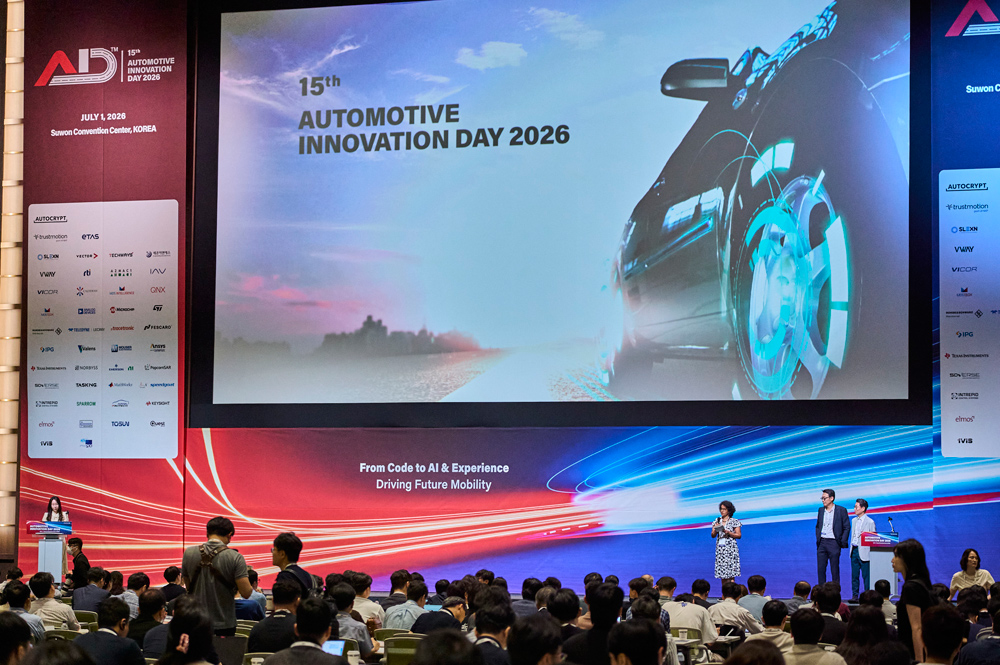
This was my first Automotive Innovation Day in Suwon, and what I really cherished was how our team pulled together another successful event – the 15th, to be exact - and seeing months of effort come alive.
What surprised me most was how effortlessly conversations began, with the participants, speakers, companies exhibiting at the event. Whether it was Korean engineers, global technology leaders or CEOs, everyone was approachable. I'd often heard that Koreans are reserved—and perhaps they are—but I found them to be warm, thoughtful and incredibly generous once a conversation started.
The single-day event culminated on a high note but I found myself wishing there had been another day - simply to continue those conversations.
Coming over all the way from India, I recorded a few interviews, sat in on multiple tracks covering various topics related to SDVs and of course, was thoroughly enlightened by keynote speeches.
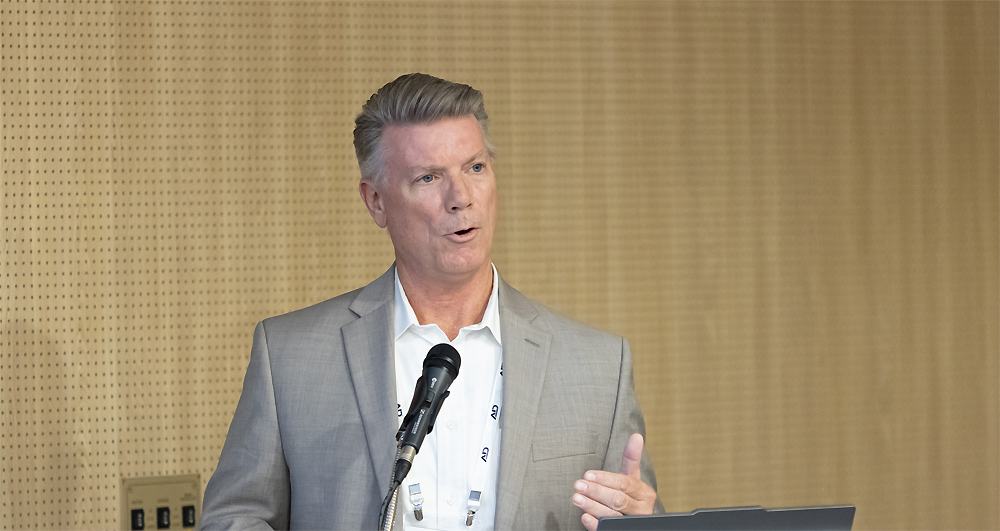
Here is the first of my interviews – with the Chief Commercial Officer, Jeff Walker of SDVerse. Jeff's perspective is fundamentally about the business of building software-defined vehicles, and that is what makes this interview distinctive.
For decades, automotive competition was defined by manufacturing scale, engineering excellence and supply chain efficiency. Today, those differentiators are rapidly giving way to software. As vehicles evolve into software-defined platforms, automakers are confronting a new reality: software development costs are rising sharply, development cycles are becoming shorter and the traditional model of building everything in-house is no longer sustainable.
Around the world, OEMs are adopting different approaches to this transition, but the underlying objective remains the same—deliver software faster, reduce costs and create vehicles that can continuously evolve throughout their lifecycle. In the process, software is becoming a standalone product, procurement models are changing and collaboration across the automotive ecosystem is becoming more important than ever.
In this interview, Jeff Walker, Chief Commercial Officer of SDVerse, discusses how these shifts are influencing OEM strategy, why software marketplaces are gaining relevance, and what the evolving SDV landscape means for suppliers, startups and automotive ecosystems in markets such as Korea and India. Jeff spoke about why the automotive industry can no longer innovate in isolation. He connected pertinent points into a broader picture of where the industry is headed.
“We need more collaboration in our industry.
More partnerships. More working together in a fluid and frictionless way.”
– Jeff Walker, Chief Commercial Officer, SDVerse.
 What are the top three questions echoing in OEM boardrooms today?
Jeff Walker It is really the classic question: Do we build it ourselves, or do we buy it? OEMs are in a dilemma over where to invest their resources and finances. Do they hire and build the talent internally, or do they outsource? The same applies to software. If they source it externally, there are licensing costs.
The second one is about scaling. How do you design something once and then scale it across different regions while still meeting local market needs? That's a major challenge, particularly for legacy automakers. Companies that are starting with a clean sheet of paper—many of the newer manufacturers, especially those coming out of China—have an advantage. They can architect their platforms with scalability in mind from the beginning.
The third is about speed. How fast can you roll out these new architectures? But that brings us back to capital investment because speed costs money. OEMs are asking themselves whether they can stretch the life of their current architecture a little longer or whether they need to invest in a new one now. That depends on the features the market is demanding.
So, these questions are all interconnected. It is about balancing investment, scaling globally while addressing regional requirements, rolling out new architectures at the right pace, and continuing to support existing customers. Those are the discussions I believe are happening in OEM boardrooms today.
.jpg) What is guiding OEMs today in deciding which software to build themselves versus source from the ecosystem?
What is guiding OEMs today in deciding which software to build themselves versus source from the ecosystem?
Jeff Walker There is a bit of a regional difference in how I would answer that. In Europe, OEMs are focused on owning the operating system because they want to control the core architecture and scale it across their vehicle platforms. Their strategy is to retain ownership of that core while partnering for software components where it makes sense.
In North America, the thinking is a little different. OEMs are largely driven by the fear of supplier lock-in. They don't want to be in a position where they're paying licensing fees to the same supplier for years simply because that supplier helped define their software architecture.
I think many of the same forces are at play around the world—in Japan, Korea and India as well. The mix may be different, but they're all wrestling with similar questions. Another important consideration is capability. Do we have the talent and engineering resources to build this ourselves? If not, acquiring that capability requires a significant upfront investment.
China is an interesting case because the business model is different. Companies like Huawei provide a large part of the software ecosystem, while the OEM focuses primarily on vehicle manufacturing and integration. It's a different approach to dividing responsibilities.
Regardless of the path they choose, everyone is moving in the same direction. There really is no turning back now—it's simply a question of how they get there.
.jpg)
.jpg) Do you believe OEMs are truly ready to procure software through a marketplace?
Do you believe OEMs are truly ready to procure software through a marketplace?
Jeff Walker SDVerse is really an introduction platform. It helps OEMs and suppliers find the right middleware, software applications and digital engineering tools for what they're trying to build. We're completely agnostic about the solutions on our marketplace. Whether it's open source, proprietary software or engineering services, we remain a neutral platform, and this is one of the reasons OEMs trust us. The marketplace is driven by technical relevance, not by who the supplier is.
What OEMs are also discovering is how much time they can save. Instead of spending months trying to identify the right software, they can narrow their search down to minutes. With the AI capabilities we've built into the marketplace, users can upload a technical specification and the platform automatically identifies the closest matches from more than 700 software listings. That's a powerful capability.
That said, this whole approach is still evolving. OEMs are still figuring out how to accelerate software development, and SDVerse is one of the tools that can help enable that. I don't think the industry has fully realized just how rapidly the software landscape is changing or how many choices now exist globally. A marketplace becomes valuable simply because it helps discover and curate what's available. We've seen cases where an OEM already had a relationship with a supplier but didn't realize that the supplier offered a particular software product until they found it on the marketplace. That ability to discover what's already out there is incredibly important.
Open source is another part of this conversation. It's still not fully understood across the industry. Most software developers understand it, and many engineers do as well, but the broader ecosystem is still learning how to work with it effectively.
I heard a great analogy at a summit last year: "Open source is free like a puppy, not like free beer." In other words, while you don't pay a license fee, there are still ongoing responsibilities. You have to maintain it, contribute fixes back to the community and support it over time. While open source is a key enabler for reducing software development costs, it also requires a different mindset and a clear operating strategy. OEMs are still learning how to incorporate that into their planning. I believe open source is essential, but it's going to take time for the industry to fully mature. That's one of the reasons initiatives like S-CORE are so important.
What is your strategy for instilling confidence in the OEM ecosystem?
Jeff Walker Building confidence is the strategy. Trust is earned by doing what you say you're going to do and by consistently delivering results. For example, privacy and security are built into our marketplace because they're critical for every member. Companies need to know that when they bring their intellectual property onto SDVerse, it's protected. They need confidence that their company information is only visible to the people they choose to share it with.
At the same time, we're continuing to demonstrate why a software marketplace like SDVerse exists and the value it brings to the industry. That's how trust is built—by showing results.
Of course, having leading industry names on the platform also helps. In North America, we have General Motors, which is a globally recognized brand. India has its own highly respected automotive companies, and we'd love to work with them as well. We'd like to see them on the platform, discovering new software solutions and becoming part of the growing SDVerse ecosystem.
Great lead in to a question on the Indian ecosystem. How are Indian OEMs and software companies accelerating their ambitions, and what is SDVerse doing in India?
Jeff Walker We are well aware of the talent, skills and engineering efficiency that India's automotive ecosystem brings to the global industry, and we want to capitalize on that. Our focus now is to build awareness by participating in more symposiums, conferences and industry events, and getting the SDVerse name out there.
The OEMs on our marketplace have highlighted specifically as a desire to have more Indian suppliers on SDVerse. Because they see India as a clear technology leader that's not cost prohibitive. So, they see that as a priority for SDVerse to have Indian suppliers on our marketplace and available for them. In alignment with that, I'm already engaged with at least 30 suppliers from India. Interestingly, the conversation almost always comes down to one question: How can SDVerse help us grow our business with companies like General Motors, Stellantis and other global automakers?
I would also say that Indian entrepreneurs and businesses are frugal and practical. We have to prove to the Indian ecosystem that we deserve the opportunity to represent them to those OEMs. SDVerse is a new business model, so we have to show them how it works and how it can create value for them. Once a company is on SDVerse, it's positioned directly in front of the people making software sourcing decisions at global OEMs. We know those automakers want to engage with India's technology ecosystem—its software companies, technology providers and Tier-1 suppliers.
.jpg) What opportunities do you see for Korean OEMs and suppliers as SDVerse expands its presence in India and across Asia?
What opportunities do you see for Korean OEMs and suppliers as SDVerse expands its presence in India and across Asia?
Jeff Walker First of all, you have two technology powerhouses—Korea and India. Both have deep expertise in software, systems engineering and automotive. When you bring those strengths together, it's a powerful combination. There's also a broader geopolitical dimension. Korea and India are well positioned to work with customers and partners across Europe, North America and other global markets. That creates a real opportunity to expand their presence and gain market share.
I believe both the Korean and Indian automotive industries can benefit from the way the global landscape is evolving. As supply chains diversify and companies look to broaden their technology partnerships, these two countries are in a strong position. They're trusted partners for many nations, and that's an advantage they can build on.
Korea has long been a leader in electronics, manufacturing and precision engineering. As the industry transitions to Software-Defined Vehicles, where do you see Korean automakers and suppliers today—and what trends are you seeing through SDVerse?
Jeff Walker I think Korea is in much the same position as the rest of the legacy automotive industry. The shift to SDVs is being led by companies like Tesla and several automakers in China, while traditional OEMs—including the Korean ones—are working hard to catch up. They've invested a tremendous amount of money in this transition.
The pace of innovation is increasing, while the competitors are developing vehicles faster and finding new ways to meet customer expectations. That should motivate all of us to move more quickly. The good news is that Korea has all the ingredients needed to succeed. It has world-class technology, exceptional engineering talent and a deep culture of precision manufacturing.
One of the things I really admire about the Korean automotive industry is its unwavering focus on safety, quality and engineering discipline. They have built a strong global reputation for delivering high-quality technology, and they're viewed as reliable and trusted partners. That reputation gives them an excellent foundation to expand their global presence as the industry continues its transition to SDVs.
We're already seeing that momentum reflected on SDVerse. In fact, Korea has more brand names on our marketplace than any other individual country. It is the fastest-growing region on our marketplace today. If you include multinational companies headquartered in the US, the numbers are different, but when you look at national ecosystems, Korea stands out.
What's the one misconception the industry still has about SDVs that needs to change?
Jeff Walker That's a great question.
I think one of the biggest misconceptions is that an SDV is simply about infotainment or the human-machine interface. It isn't. An SDV is fundamentally about adopting a software-first mindset. An SDV is about designing the vehicle with software at its core and then developing the hardware to support that software. That's a different approach from how the automotive industry has traditionally engineered vehicles.
Right now, we're in the middle of that transition. I don't think we've reached the destination yet—we're probably halfway there. But that's the real mindset shift.
AEM(오토모티브일렉트로닉스매거진)
<저작권자 © AEM. 무단전재 및 재배포 금지>



.jpg) [ICS] 10BASE-T1S 무료 교육 (매월 둘째 주 금요일)
[ICS] 10BASE-T1S 무료 교육 (매월 둘째 주 금요일)